Under the weather today and never really got it together. Can I have an Interbike hangover even though I didn't go to Interbike? Not to mention those Snafu pegs deserve another day in the sun. I suppose I should have gotten one of these.
In the meantime, if you haven't already, please watch the new S&M video trailer. And the Kink trailer. Of course neither of those can compete with this.
•••••••••••••••
EDIT: Since the original GG Allin video didn't work, here's a rather fantastic extra of him being interviewed on Jerry Springer.
And heck, one more, with Jane Whitney (whoever that is). Two parts:
Let's run through some Interbike photos, shall we? Thanks again to Jacob for sending them—his comments will appear first in quotes.
1. Kink Pivotal posts.
Here we have Kink's two varieties of seatpost—slammable, and absolutely have to be slammed. I'm sure that extra inch of aluminum is all that's keeping you from triple whips. (More importantly, note the seatpost clamps in the background. Keep hope alive!)
2. Kink ceramic headset.
Ceramic bearings are all the rage in road and mountain (and industrial applications, I'm sure). They're smoother, faster, and—of course—more expensive. This Kink version is supposed to retail for somewhere in the neighborhood of $100. Let's hope they remembered to make them correctly this time. Think this is a case of killing a fly with a grenade—does anyone's headset not spin smoothly enough? Will this help someone pull a sextuple whip or 37 barspins? Is it worth spending quadruple what a "regular" headset costs? Let me think...no.
3. KHE Centaur bar/stem combo.
Uh, the handlebar is actually a three-piece bar? Color me frightened.
“At first glance this you would think this would be a seat post clamp. but you would be wrong. It's the clamp inside the one piece bar and stem combo. Looks like a seat post clamp from 10 years ago.”
Yes it does. Words cannot express my disappointment.
4. KHE freecoaster.
"Coaster hub that you can adjust with only a allen key through the middle of the axle, allowing you to adjust on the fly for how much play you want without have take anything off the bike. Pretty sweet, but I dont ride a freecoaster hub.”
Neither do I, but having dealt with a Geisha Street for a while (two washers or three?), I can see where this would be a desireable development. Look for every other freecoaster maker out there to quickly license it if it works.
5. T-1 Cyclops stem.
Ain't gonna lie, I'm pretty happy to see an honest-to-God new T1 product. And I can appreciate stems with no bolts on the back, but a traditional four-bolt cap. Not really psyched on split caps, but oh well. At least it's not carved up all to hell and back.
6. Sunday Model D
I was going to call this Sunday's long-awaited trails frame, but I'm not sure whether people were really waiting for them. I know it has "normal" 5mm dropouts and a regular non-wave downtube. I do not know whether it has longer stays. The graphics are pretty rad, though. And you can't go wrong with olive and silver. Please make padsets.
7. Odyssey sidehack
I never understood sidehacks, even in the BMX Action days. Cool-looking bike, though. Are those...Cyclecraft bars?
8. Fly grips...er, grip?
Interesting. One grip that you can cut yourself to custom lengths. Or, if you ride a fixed with drops, buy two and cut the flanges off. I'm sure there are other uses for it, too, but this isn't that kind of website.
9. 2-Hip Groove...whatever.
“quite possibly the worst eye sore at interbike... I cant really say much more...”
“kind of hard to see but the forks get crazy tapered down near the drop outs. dakota has been riding them and that have held up. hmmmm.”
They were displayed on the Dakota Roche frame, which I don't know anything about except that it has gussets on the top and bottom at the headtube. I'd like to see the Dakota, Eddie and DeHart frames side-by-side.
11. DK Random Wrench V2
“spoke wrench built into the top, sleeker one-peice design. with a little socket nub on the side. much nicer looking. not a bike part but something to make fixing it much easier.”
I've never had a Random Wrench—if I was carrying a camera bag anyway I didn't mind loading individual tools—but it makes sense, at least. Seems inevitable that I'll wind up with one.
12. Premium 3.3 pound frame “sooo you make a 3.3 lbs frame and you build it up and bolt it to a stand, yet have no stand- alone frame to pick up... premium you are intelligent! so the tubes are double butted and drawn in a special way. then heat treated for 3.5 times longer than normal frames. haro guy said it would shatter before it bent... so you have that to look forward to!”
I'm not sure whether I need to add anything to that, other than the low standover is disgusting and the "Strawberry" toptube integrated seatclamp may be worse.
13. Stolen Pivotal post.
“more plastic! excuse me thermalite...”
I'm genuinely torn. On the one hand, if you're going to just slam your post anyway, there's no reason it shouldn't be made of plastic or wood or cardboard or whatever. On the other hand, is it really necessary? I vote HELL no. How heavy can one of those stubby little aluminum bits be? Now, if it was a plastique post, that would be a different story. I could get behind that.
14. Haro Freestyler
My friend Ian sent me this one. While the double top tube and graphics look spot-on, and the black mags are appropriate enough, I always hate the generic three-piece cranks and padded seats that appear on these throwback bikes. Not to mention the pseudo Gower Power sprocket and all-black tires. Bikes like this just end up looking like a mish-mash of styles from different eras and aren't particularly good for anything, except preying on the nostalgia-blinded. Why not do it right?
It was inevitable, I suppose, the return of the monochrome BMX bike. Haven't seen any in NYC yet (besides the ubiquitous all-black versions, which have never gone out of style and represent more of a complete lack of obsession with color than an unhealthy one), but a quick spin around the web reveals a couple of freshly built examples:
The first one I saw was this all-white Kink. Quite the photo, huh? It reminded me of two things—ghost bikes, which are locked to signposts and light poles to memorialize cyclists who were killed (or injured) near the spot, and the all-white GT Pro Freestyle Tour that came out in the '80s during a Eurocraze (if I'm not mistaken, BMX Plus! did an all-white "Project Euro" as well):
The only mystery about the Kink are the tires, which I expect are Primo Walls. Not the best choice for a current bike, but white tires are hard to come by these days. (If you're going to ride this bike, stock up.) I'm pretty sure the last time I had a set I also had white Z-Rims. Also, don't lock it up in a major city unless you want people to assume it's a tribute to the dead and get REALLY mad at you when you unlock it.
Then there was this all-red Fit Hawk, which was posted on the Fit site around the same time as they announced the availability of the red frame and parts. Like the white Kink, it was built by a shop (and I'd be curious to know whether either of them actually sell).
The Fit, like the Kink, appears to be all current with the exception of the tires, in this case Primo V-Monsters. They made V-Monsters in blue as well, so one would hope someone would make a Crip Hawk to go with the Blood version. (I'm surprised by how well the tones match, despite the use of both flat and gloss red, and paint and anodization and rubber.)
My favorite mostly monochrome bike was a Pro Performer that Eddie Fiola rode back in the mid-'80s, a recent semi-accurate reproduction which is shown here:
Given the black tires and the gold and chrome parts, it's more like one of Aaron Ross'sneon monstrosities than the unicolors above. But it wouldn't surprise me one bit if colored tires made a comeback sometime soon. What goes around, comes around.
There's something you need to know before we go any further. I am not a BMX industry insider, nor have I ever claimed to be. I have never even worked for a bike shop. I don't know about sales numbers or production costs or profit margins or anything like that. I don't even balance my checkbook. The views reflected on this blog are mine and mine alone, and if anything is blatantly wrong, please feel free to correct it. We're all in this together.
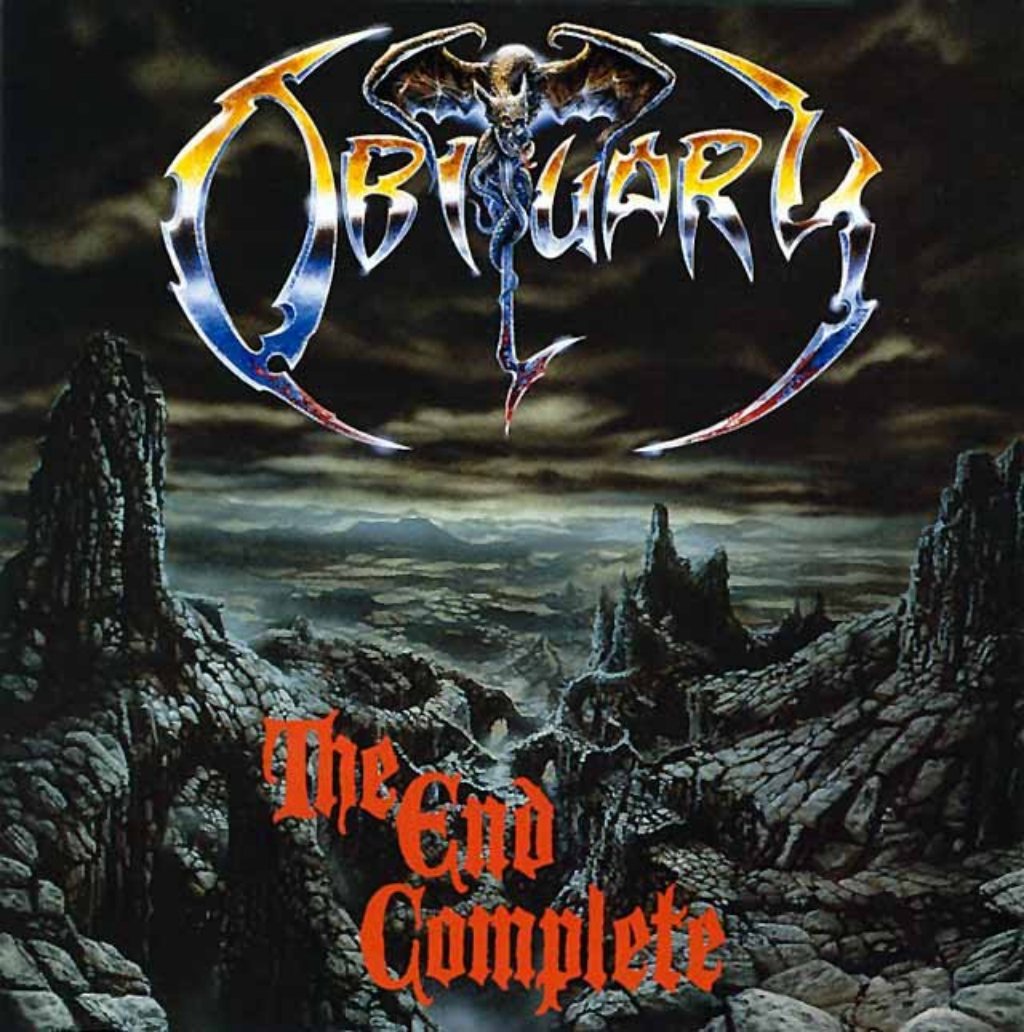
(The headline today is the name of an Obituary record. It only marginally touches on the subject matter, but that's OK because it's the name of an Obituary record.)
Not sure whether you've noticed, but there seem to be a lot of bike companies offering completes these days. And it's not just the usual suspects like DK, GT, Haro, WTP, 2-Hip, Mirraco, and Fit. Nope. There's Stolen and Verde, and Subrosa and Kink, and now FBM has thrown their hat into the ring. I'm sure there's others I'm not thinking of, but providing a comprehensive list wasn't what I was going for. Let's just say that there are a lot of companies offering complete bikes and leave it at that.
This is a good thing, right? After all, it was hard to find a decent complete BMX bike as little as 10 years ago (unless you were looking for a hefty Mirra Pro, a Dyno VFR, or the infamous Poverty Buck Ninety Nine or whatever the hell it was called). Now you can choose from a wide variety of completes with all the trimmings—full chro-mo frames and forks, internal/mid, 25/9 cassette (or freecoaster) gearing, Pivotal seats, big bars, name-brand tires and grips—that are rideable out the box for right around $500. If you're willing to ride a bike with some hi-ten steel tubing, you can get a decent complete for less than the cost of a new frame. Not bad. And with rider-owned companies entering the fray, it finally means even the low-end steel frames have proper geometry. These aren't box-store Mongeese.
But what does it all mean?
Chances are, if you've been riding for more than a couple of years, you won't be purchasing a complete bike anytime soon. There are a few reasons why you might—your bike gets stolen, you want a backup bike, or to have a spare for friends—but most people who've been riding for a while have gotten used to the idea of building up their own bikes piece by piece. Or maybe you insist on a 21" frame, which is somewhat rare in the complete world. So the main target, best that I can figure, is beginners. Get the kids riding an entry-level steel bike, then, as they get older, get them on the next-level complete, and so on and so on. (Mirraco offers sub-20 pound aluminum 16" and 18" bikes for even the littlest rippers.) Then eventually, when they're on the top-of-the-line complete, they upgrade or replace broken parts with aftermarket stuff. The hope being that by then maybe they'll have developed some brand loyalty. It could work.
In the meantime, who benefits? Riders, especially those just starting out. Virtually any bike that shows up under the 2008 Christmas tree will be a good one. And with so many companies jumping into the market, pricing should stay competitive. Parts companies, for another. Someone has to spec all these bikes, and from the looks of them, it's not all generic stuff. Legit companies like Sun, Odyssey, Animal and Tioga have been tapped for componentry. (FBM even started their own house brand, Nice, to equip their completes.) How far the humble Twisted PC pedal has come.
What I'll be most curious to see is how the individual companies fare, especially the newer ones like Subrosa and Verde. It seems to me that there are an awful lot of eggs being placed in this particular basket, and seeing that riders have long been assured that the best way to get a bike you liked is to DIY, now things need to swing back the other way. At the same time, will affordable completes make consumers less likely to buy a $360 frame from the same companies? It appears—to me—that this is a gamble that BMX is just going to continue to get bigger. And maybe it will. Maybe if a kid starts out on an affordable, properly built complete, like an FBM or Kink, he or she will be more likely to stay with BMX and not move quickly on to skateboarding or soccer or Grand Theft Auto.
And of course if it doesn't work, completes will just end up costing even less. Win-win!
EDIT: Good interview with JPR about the FBM completes here.
Have you ever had a chain snap on you? It's not fun. Usually it happens when you're really stepping into it, which makes the results that much worse. Knee to the stem, thigh to the crossbar, usually you go over the bars. If you're lucky, you land on your hands instead of your head. If you're not lucky, it happens when you're trying to sprint through a busy intersection and you get run over by a bus. Either way, it's not much fun. But hey, chains break. It happens.
That said, isn't the chain the last thing you'd want to lighten up on purpose? There was a time not so long ago when BMX chains were judged the same way hip-hop chains were: Heavier was better. There was the KMC 415h (or Kink chain) and the massive Sharp 420—which was better suited for a motorcycle or a garage door opener. Had things continued in that direction, we'd all be riding chains that look something like this (minus the feet):
They didn't continue like that, of course. Gearing dropped, so you didn't need to worry about your 45 bashing into everything anymore. And with chainrings out of harm's way, chains were free to get lighter. People went with traditional KMCs, like 410s, 510s and 710s. But that wasn't good enough. Oh no. Road chains had long used drilled-out pins and hollow plates. Izumi made a hollow-plate BMX/track chain back in the day. Why not do the same with new BMX chains? So KMC introduced the 710sl:
It came in at 365 grams as compared to 420 (!!!) grams for the regular 710 (according to Fat). Not much of a difference—less than two ounces. Of course it comes with enough links to run 48/16, so the weight difference is presumably less if you're running 28/10 or lower. And it, um, looks cool.
There are differences between road and BMX, however. Small as BMX drivetrains are, the chains still take hits every once in a while. And running it on a eight-, nine- or 10-tooth driver places a lot of stress on the chain, even if it doesn't have drilled-out plates and hollow pins. KMC can give you numbers for "pin power" and "breakload" all they want, but those don't take into account bashing a drilled-out link on a rail or ledge and then cranking full-out towards something else.
Look, I appreciate that plenty of people run drilled-out chains, and a majority of them are still very much alive. But of all the things to drill out, the part on your bike that arguably takes the most stress? What's next? Steerer tubes? Pedal spindles? Heck, even the Grim Reaper makes more sense to me than this. There are certain things I'd rather not see drilled out. Chains. Stem bolts. Forks. Anything that, if it snaps, will probably send me to the hospital or the dentist. And even barring injury, I'm not a big fan of liamfahyhamptoning around. So I like my chains like I like my teeth and my Alaskan wildlife preserves—undrilled.
(Of course, seeing that half-link chains have seemed to have more problems with snapping than regular chains, there's no way anyone would come out with a drilled-out halflink chain. Well, no one except KHE. Lovely.)
P.S. Sean Burns only rides Wipperman chains. Their 1G8 is apparently the strongest chain on the market, according to—um, them. This video has nothing to do with chains, but a minute of Sean Burns never hurt anybody. Well, except him.
Let me preface this entry by saying that I understand that, given that modern sprockets are so small, there are only so many ways to design them. Especially since they have to be a) light and b) have more than one bolt hole. That said, this is pretty funny. Parallel evolution or industrial espionage?
KINK.
UNITED.
ANIMAL.
FEDERAL. I was hoping to find explanations on each company's website as to how they came up with their respective designs. However, only Federal made the effort:
"The 4 cross pattern is ideal for evenly spreading any loads evenly over the sprocket itself in the event of an impact."
Oh. I'm not quite sure what that means, other than that they need to hire a copy editor. Is four-cross really more ideal than five? Or six? (And if it is so ideal for "evenly spreading any loads evenly", why aren't we all running 20" versions of these?)
Of course all of these designs are just updates of the nearly 30-year-old Redline Flight gear (seen here in a rather blurry spy photo):
If Redline were smart, they would do a 22-30t version of this same exact sprocket with all the engraving and stuff. Step up, Gork!
(Incidentally, my favorite current sprocket design is the FBM Wurlitzer. Good stuff.)
In a world where every new BMX "innovation" is met at best with praise and at worst with a shrug, there needs to be a voice of dissent. SPRFLS is that voice. Make no mistake—we welcome progress, provided it actually IS progress. You are not the width of your handlebars.
Feel free to e-mail suggestions, corrections, tips or death threats to sprfls@gmail.com
Even more pointless (and sometimes entirely un-BMX-related) twittering at http://twitter.com/SPRFLS and http://twitter.com/russbengtson